Understand the Function of Each Space Assess How the Space Will Be Used Before selecting any lighting fixture, it is essential to understand how the space will actually be used. In luxury interiors, lighting should do more than illuminate a room — it should support the lifestyle, function, and atmosphere of the space. A formal dining room, for example, often benefits from a statement chandelier that creates presence and elegance, while a bedroom requires softer, more calming light to encourage comfort and relaxation.
Different areas within a home or hospitality setting serve different purposes, and the lighting should respond accordingly. Social spaces such as living rooms, lounges, and dining areas usually need a combination of ambient and decorative lighting to create warmth and visual impact. In contrast, private areas such as bedrooms, dressing rooms, or reading corners call for more intimate, layered illumination that enhances comfort without overwhelming the space.
By first assessing how each space is used, homeowners and designers can choose lighting that is not only visually refined but also practical, balanced, and perfectly aligned with the overall interior experience.
Align Lighting Design with Spatial Comfort and Elegance In luxury interiors, lighting should always enhance both comfort and elegance. A well-designed space is not defined only by beautiful furniture or premium materials, but also by how light interacts with the environment. The right lighting design can soften architectural lines, highlight textures, and create a calm, welcoming atmosphere that feels both functional and refined.
To achieve this balance, lighting should be planned in harmony with the proportions, materials, and mood of the room. Warm ambient lighting often works best in high-end residential and hospitality spaces, as it adds softness and depth without creating visual harshness. At the same time, decorative fixtures should contribute to the overall design language of the interior, reinforcing a sense of sophistication rather than competing for attention.
True elegance in lighting comes from restraint, balance, and intention. When lighting is aligned with spatial comfort, it allows the room to feel effortless, inviting, and complete. Rather than overpowering the interior, it elevates the experience of the space and supports the way it is meant to be lived in and enjoyed.
Choose Lighting That Matches the Interior Style Reflect the Overall Design Language of the Space Lighting should feel like a natural extension of the interior design rather than a separate decorative element. In luxury spaces, every detail contributes to a unified visual language, and lighting plays a key role in reinforcing that identity. A modern minimalist interior may call for clean lines, restrained forms, and understated finishes, while a more decorative setting may benefit from sculptural fixtures with richer materials and stronger visual presence. By selecting lighting that reflects the overall design language of the space, the interior feels more intentional, cohesive, and refined.
Coordinate Materials, Finishes, and Visual Tone The choice of lighting should also be guided by the materials and finishes already present in the room. Metals, glass, stone, wood, and fabric all influence the overall atmosphere of an interior, and lighting fixtures should complement these elements rather than compete with them. Warm finishes such as antique brass or brushed gold often add softness and sophistication, while matte black or polished chrome can create a sharper, more architectural effect. When the materials and visual tone of the lighting align with the wider palette of the space, the result is a more balanced and elegant interior experience.
Balance Statement Lighting with Interior Harmony A striking chandelier or designer wall lamp can become a focal point, but even statement lighting should remain connected to the style of the room. In high-end interiors, visual impact is most successful when it is balanced with harmony. A bold fixture should enhance the character of the space, not overpower it. This means considering scale, silhouette, detailing, and how the fixture interacts with surrounding furniture, finishes, and architecture. When statement lighting is chosen with care, it adds depth, sophistication, and a stronger sense of design identity to the interior.
Create Depth with Layered Lighting Combine Ambient, Task, and Accent Lighting with Intention Layered lighting is essential in luxury interiors because it creates depth, flexibility, and a more sophisticated spatial experience. Rather than relying on a single central fixture, high-end spaces benefit from a thoughtful combination of ambient, task, and accent lighting. Ambient lighting provides the overall glow of the room, task lighting supports specific activities such as reading or dining, and accent lighting highlights architectural details, artwork, or textured surfaces.
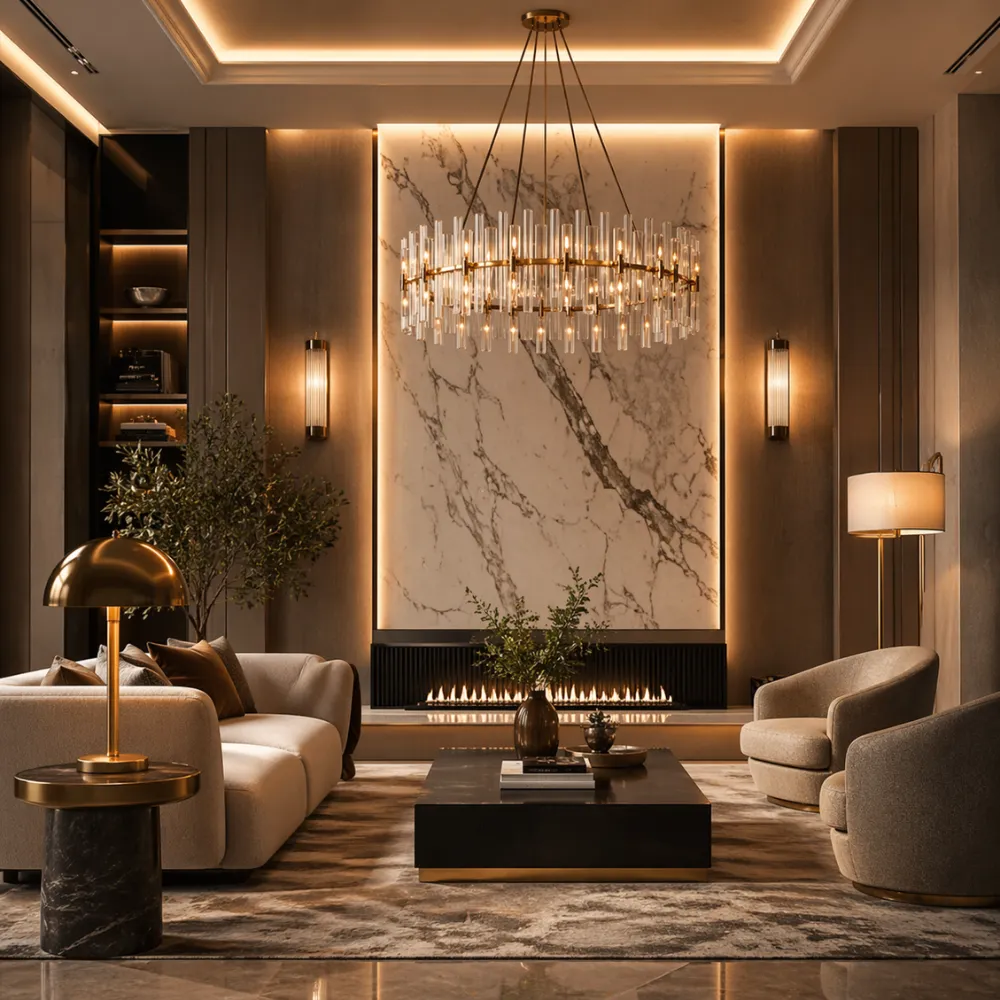
When these layers are combined with intention, the room feels more balanced and visually rich. A chandelier may establish presence and atmosphere, while wall lamps, table lamps, or recessed lighting add softness and functional clarity. This approach allows lighting to shape the mood of the space throughout the day and evening, making the interior feel more comfortable, dynamic, and refined. In luxury settings, layered lighting is not only practical — it is a key element of elegance and spatial harmony.
Focus on Scale, Proportion, and Ceiling Height Choose Fixtures That Suit the Dimensions of the Room The size of a lighting fixture should always be considered in relation to the dimensions of the room. In luxury interiors, a fixture that is too small may feel insignificant, while one that is too large can overwhelm the space and disrupt visual balance. A well-proportioned chandelier, pendant, or ceiling light should complement the room’s width, height, and layout, while also relating naturally to key furniture pieces such as dining tables, seating areas, or beds.
When the scale of the lighting is carefully matched to the room, the entire interior feels more composed and intentional. This is particularly important in high-end homes, villas, and hospitality spaces, where lighting is expected to contribute to both function and design presence. Properly scaled lighting helps define the space with elegance, ensuring that the fixture enhances the architecture rather than competing with it.
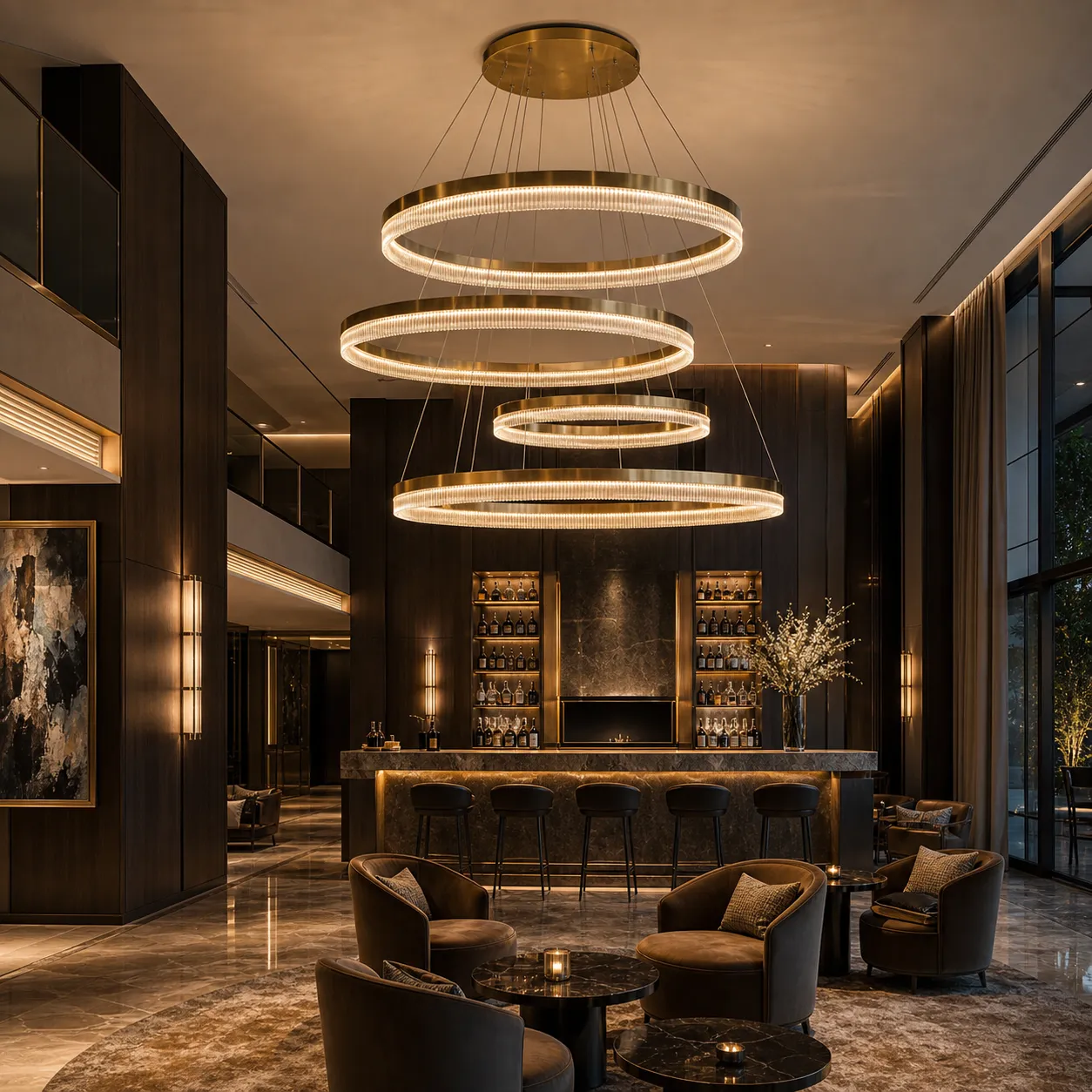
Consider Ceiling Height to Achieve Visual Balance Ceiling height plays a major role in determining the right type and size of lighting. In rooms with standard ceilings, a compact chandelier, flush mount, or semi-flush fixture may create a cleaner and more comfortable result. In contrast, spaces with higher or double-height ceilings often benefit from elongated pendants, cascading chandeliers, or larger statement pieces that visually connect the upper volume with the rest of the interior.
Choosing lighting according to ceiling height helps maintain a sense of proportion and spatial harmony. It also affects how the room feels emotionally — lower ceilings often require softer, more restrained lighting, while taller spaces can support more dramatic forms and vertical composition. In luxury interiors, this attention to ceiling height ensures that the lighting feels integrated, elegant, and perfectly suited to the architectural character of the space.